Up in the Morning Early
By Robert Burns
Up in the morning's no' for me,
Up in the morning early;
When a' the hills are coverd wi' snaw,
I'm sure it's winter fairly.
Cauld blaws the wind frae east to wast,
The drift is driving sairly;
Sae loud and shrill's I hear the blast,
I'm sure it's winter fairly.
The birds sit chittering in the thorn,
A' day they fare but sparely;
And lang's the night frae e'en to morn,
I'm sure it's winter fairly.
Wednesday, March 29, 2006


Tuesday, March 28, 2006
Comeback
By Tess Gallagher
My father loved first light.
He would sit alone
at the yellow formica table
in the kitchen with his coffee cup
and sip and look out
over the strait. Now,
in what could be
the end of my life, or worse,
the life of someone I love, I too
am addicted to slow sweet beginnings.
First bird call. Wings
in silhouette. How the steeples
of the evergreens make a selvage
for the gaunt emerging sky.
My three loves are far away
in other countries,
and one is even under
this dew-bright ground
where the little herds
of jittery quail peck
and scurry for their lives.
My father picks up his
cup. Light is sifting in
like a gloam of certainty
over the water. He knows
something there in the half light
he can't know any other way.
And now I know it with him: so much
is joining us in the dawn
that no one can ever be parted.
It steals over us because we left
the warm beds of our dreams
to sit beside what rises.
I think he wants to stay there
forever, my captain, gazing but not
expecting, while the world
begins, and, in a stark silent calling,
won't tell anyone what it's for.
By Tess Gallagher
My father loved first light.
He would sit alone
at the yellow formica table
in the kitchen with his coffee cup
and sip and look out
over the strait. Now,
in what could be
the end of my life, or worse,
the life of someone I love, I too
am addicted to slow sweet beginnings.
First bird call. Wings
in silhouette. How the steeples
of the evergreens make a selvage
for the gaunt emerging sky.
My three loves are far away
in other countries,
and one is even under
this dew-bright ground
where the little herds
of jittery quail peck
and scurry for their lives.
My father picks up his
cup. Light is sifting in
like a gloam of certainty
over the water. He knows
something there in the half light
he can't know any other way.
And now I know it with him: so much
is joining us in the dawn
that no one can ever be parted.
It steals over us because we left
the warm beds of our dreams
to sit beside what rises.
I think he wants to stay there
forever, my captain, gazing but not
expecting, while the world
begins, and, in a stark silent calling,
won't tell anyone what it's for.
Monday, March 27, 2006
Trees
By W. S. Merwin
I am looking at trees
they may be one of the things I will miss
most from the earth
though many of the ones I have seen
already I cannot remember
and though I seldom embrace the ones I see
and have never been able to speak
with one
I listen to them tenderly
their names have never touched them
they have stood round my sleep
and when it was forbidden to climb them
they have carried me in their branches
By W. S. Merwin
I am looking at trees
they may be one of the things I will miss
most from the earth
though many of the ones I have seen
already I cannot remember
and though I seldom embrace the ones I see
and have never been able to speak
with one
I listen to them tenderly
their names have never touched them
they have stood round my sleep
and when it was forbidden to climb them
they have carried me in their branches
Sunday, March 26, 2006
Poppies
By Mary Oliver
The poppies send up their
orange flares; swaying
in the wind, their congregations
are a levitation
of bright dust, of thin
and lacy leaves.
There isn't a place
in this world that doesn't
sooner or later drown
in the indigos of darkness,
but now, for a while,
the roughage
shines like a miracle
as it floats above everything
with its yellow hair.
Of course nothing stops the cold,
black, curved blade
from hooking forward—
of course
loss is the great lesson.
But I also say this: that light
is an invitation
to happiness,
and that happiness,
when it's done right,
is a kind of holiness,
palpable and redemptive.
Inside the bright fields,
touched by their rough and spongy gold,
I am washed and washed
in the river
of earthly delight—
and what are you going to do—
what can you do
about it—
deep, blue night?

Saturday, March 25, 2006


Friday, March 24, 2006

Thursday, March 23, 2006
Imagine yourself as constantly changing, like the water in the stream that you stepped in to get to one side and then stepped in again to get back to the side you left.
You are process; absent any fixed nature. Your personality is nothing more than a fleeting reflection that you see in the water's surface. Once you stop looking, the reflection and you disappear.
Don't fear your fleeting nature. Embrace it for that is who you are. By accepting your nature, you are free of all that holds you back from becoming who you really are.
You are process; absent any fixed nature. Your personality is nothing more than a fleeting reflection that you see in the water's surface. Once you stop looking, the reflection and you disappear.
Don't fear your fleeting nature. Embrace it for that is who you are. By accepting your nature, you are free of all that holds you back from becoming who you really are.
Wednesday, March 22, 2006
Heed
If, as in a dream, you see a light brighter than the sun, your remaining attachments will suddenly come to an end and the nature of reality will be revealed.
Such an occurrence serves as the basis for enlightenment. But this is something only you know. You can't explain it to others.
Or if, while you're walking, standing, sitting, or lying in a quiet grove, you see a light, regardless of whether it's bright or dim, don't tell others and don't focus on it. It's the light of your own nature.
Of if, while you're walking, standing, sitting, or lying in the stillness and darkness of night, everything appears as though in daylight, don't be startled. It's your own mind about to reveal itself.
Or if, while you're dreaming at night, you see the moon and stars in all their clarity, it means the workings of your mind are about to end. But don't tell others.
Bodhidharma
Tuesday, March 21, 2006
Duality and non-duality in science and religion
By Mark MacDowell and Paul Utukuru, Science & Theology News, May 26, 2005
-Article Reprint-
A major problem in modern cosmology is related to the issue of duality and non-duality.
Sylvania, Ohio (USA) -- A bad workman blames his tools, but what if the tools are just not sharp enough for the job? A major problem in modern cosmology is related to the issue of duality and non-duality, which is directly related to the only tool available to us: mathematics. With math, we try to trace back the origins of our universe to the point when space and time did not exist.
Can cosmology provide insight into science and religion?
All goes well until we get to just a moment after the big bang. Beyond that, our mathematics breaks down and refuses to go back any further to the exact moment of the event, usually referred to as the space-time singularity.
This breakdown occurs for two reasons. One is that our cosmological mathematics is either time-dependent, meaning that there is no change in space without some reference to a change in time, or space-dependent, meaning that there is no time without some reference to a change in space. That being the case, how can we ever describe mathematically the space-time singularity that doesn’t exist in space-time?
This problem boils down to our inability to establish a connected relationship between the singularity at the moment of the big bang and the multiplicity after the big bang. What seems to be necessary is a mathematical formalism which is space-time independent. Obviously, no such thing exists.
The other reason for our inability to reach the space-time singularity with our mathematics is our inability to derive duality or multiplicity from none or the One. In other words, how did the two and the many come from the One or none if there was only one or none to begin with?
In this context, the major religions prevailing in the world today can be divided into two broad categories, theistic and non-theistic. The theistic ones can be further divided into a monotheistic group and a polytheistic group. Among the strictly monotheistic ones are all three Abrahamic religions and Sikhism. The polytheistic group includes such religions as Shinto, the Native American Toltec tradition and the new neo-paganism emerging in some parts of Europe. The non-theistic group includes Buddhism, Jainism, Taoism and the like. Hinduism is both polytheistic and monotheistic, even though most Hindus are quick to argue that their numerous deities are but different manifestations of the One God. Furthermore, Hinduism is also nontheistic in the sense that the metaphysics of Hindu Vedanta is almost identical to that of Buddhism.
Contrary to popular belief, there is indeed a common metaphysical thread that runs through all the religions listed above. And that is the notion of oneness of name and form that permeates our world. It is described as the “Great One” in the Dead Sea Scrolls and as God the Father in Christianity. It is referred to as Sunyata in Buddhism and as Brahman in Hindu Vedanta. Although this concept of oneness occurs in so many different locations in the holy books and verbal transmissions of all the religions of the world, the way it is addressed in Buddhism and Vedanta can be subjectively realized and experimentally validated.
These traditions recognize that all our perceptions and our conceptions, including our languages and our mathematical tools, involve duality and multiplicity. Buddhism at its most austere is expressed in its “Middle Path.” Using the dialectic as a cathartic device, it takes a strong logical position that all language is dualistic because in order to define a term one must define its “anti-term” — its opposite. One cannot speak of any concept without at the same time giving equal credence to the existence of its opposite. For example, there would be no “left” without “right,” no “up” without “down,” no “athlete” without “couch potato,” no “blue” without “non-blue.” Even a concept as simple as “tree” is dependent on “non-tree ” for its definition.
What does this mean? In general, it means one cannot create a term in a vacuum. With nothing against which it can be contrasted, a term is meaningless. Therefore, to describe “The Great One” using language that is dualistic or multiplistic is meaningless.
To experience the Great One, the recognized pathway among the theistic religions is prayer and revelation. But if trying to describe what is essentially ineffable is a misdirected effort, what might work is something that enables you to transcend you own mind and take it out of space-time. This is where yogic practices such as meditation, repetitive chanting and reflective Zen come into the picture.
Thus, all the seemingly independent concepts in our vocabulary are actually a giant compendium with intersecting origins. This “dependent origination” also applies to the real world we live in. For example, we would not exist if it weren’t for the plants that just happen to exhale exactly the same mixture of gases that we couldn’t exist without. Likewise, we exhale exactly the same mixture that they need.
What about our planet? Isn’t it an independent entity? Hardly! Our own planet came from somewhere and is sustained by something. Without the sun, we would freeze quicker than you could read about it. Comets of a non-earthly origin are thought to have brought water to earth and actually seeded the potential for life here. Our own sun is dependent on its own “birth galaxy” and our galaxy is dependent upon its own “birth cluster,” and so it goes. Therefore, nothing in our universe has any real independent existence.
The Buddhist sees our whole world as full of hints or arrows pointing to non-duality, and it is interesting that modern science is also slowly picking up on non-duality. Quantum teleportation as well as the Bose-Einstein condensate are two shining examples. In both cases, what appear to be separate particles or entities act as a unit not separated in time. The Buddhist would take these facts as an intellectual starting point, the furthest outpost of rationality, from which to make the leap from the four dimensions of here and now, to that which lies beyond the four dimension of space-time: the non-dual. Sufism and other mystical disciplines involve the same sort of techniques.
Religion can encourage the student to contemplate dependent origination exhibited by nature as well as dependent origination in language as a springboard to a “higher truth” of intuitional insight. This insight, called prajnaparamita in Buddhism, goes beyond where language and conceptualization function into a non-dual higher reality: that “Great One” from which we all come and to which we all shall return.
-------------
Mark MacDowell is a professor of philosophy at Lourdes College in Sylvania, Ohio. Paul Utukuru is a retired medical physicist.
More Doctors are Believers
The first study of physician religious beliefs has found that 76 percent of doctors believe in God and 59 percent believe in some sort of afterlife. The survey, performed by researchers at the University of Chicago and published in the July 2005 issue of the Journal of General Internal Medicine, found that 90 percent of doctors in the United States attend religious services at least occasionally, compared to 81 percent of all adults. Fifty-five percent of doctors say their religious beliefs influence how they practice medicine.
These results were not anticipated. Religious belief tends to decrease as education and income levels increase, yet doctors are highly educated and, on average, well compensated. The finding also differs radically from 90 years of studies showing that only a minority of scientists (excluding physicians) believes in God or an afterlife.
Read more here.
The first study of physician religious beliefs has found that 76 percent of doctors believe in God and 59 percent believe in some sort of afterlife. The survey, performed by researchers at the University of Chicago and published in the July 2005 issue of the Journal of General Internal Medicine, found that 90 percent of doctors in the United States attend religious services at least occasionally, compared to 81 percent of all adults. Fifty-five percent of doctors say their religious beliefs influence how they practice medicine.
These results were not anticipated. Religious belief tends to decrease as education and income levels increase, yet doctors are highly educated and, on average, well compensated. The finding also differs radically from 90 years of studies showing that only a minority of scientists (excluding physicians) believes in God or an afterlife.
Read more here.
Monday, March 20, 2006

Sunday, March 19, 2006
Saturday, March 18, 2006
I Needed This One
"Often we see other sentient beings as hassles: "This mosquito is disturbing me. Those politicians are corrupt. Why can't my colleagues do their work correctly?" and so on. But when we see sentient beings as being more precious than a wish-fulfilling jewel, our perspective completely changes. For example, when we look at a fly buzzing around, we train ourselves to think, "My enlightenment depends on that fly."
This isn't fanciful thinking because, in fact, our enlightenment does depend on that fly. If that fly isn't included in our bodhicitta, then we don't have bodhicitta, and we won't receive the wonderful results of generating bodhicitta--the tremendous purification and creation of positive potential.
Imagine training your mind so that when you look at every single living being, you think, "My enlightenment depends on that being. The drunk who just got on the bus--my enlightenment depends on him. The soldier in Iraq--my enlightenment depends on him. My brothers and sisters, the teller at the bank, the janitor at my workplace, the president of the United States, the suicide bombers in the Middle East, the slug in my garden, my eighth-grade boyfriend, the babysitter when I was a kid--my enlightenment depends on each of them." All sentient beings are actually that precious to us."
Source: Cultivating a Compassionate Heart: The Yoga Method of Chenrezig by Bhikshuni Thubten Chodron
Achieiving Buddhahood
"According to Highest Yoga Tantra, some persons attain Buddhahood in one lifetime, and because these persons are not born with a body adorned with the major and minor marks they must achieve such a body through the practice of deity yoga.
Meditation on oneself as undifferentiable from a deity is the special cause... for attaining Buddhahood. If one meditated only on emptiness and did not cultivate any method--either that of the Perfection or that of the Mantra Vehicle--one would fall to the fruit of a Hinayana Foe Destroyer. In order to attain the definite goodness of the highest achievement, Buddhahood, deity yoga is needed. Also, ...one must view one's body clearly as a divine body and train in the pride of being a deity. Without deity yoga the Mantra path is impossible; deity yoga is the essence of Mantra. "
Source: Tantra in Tibet by His Holiness the Dalai Lama
"According to Highest Yoga Tantra, some persons attain Buddhahood in one lifetime, and because these persons are not born with a body adorned with the major and minor marks they must achieve such a body through the practice of deity yoga.
Meditation on oneself as undifferentiable from a deity is the special cause... for attaining Buddhahood. If one meditated only on emptiness and did not cultivate any method--either that of the Perfection or that of the Mantra Vehicle--one would fall to the fruit of a Hinayana Foe Destroyer. In order to attain the definite goodness of the highest achievement, Buddhahood, deity yoga is needed. Also, ...one must view one's body clearly as a divine body and train in the pride of being a deity. Without deity yoga the Mantra path is impossible; deity yoga is the essence of Mantra. "
Source: Tantra in Tibet by His Holiness the Dalai Lama
Friday, March 17, 2006
Thursday, March 16, 2006
Wednesday, March 15, 2006
The Greatest
The greatest achievement is selflessness.
The greatest worth is self-mastery.
The greatest quality is seeking to serve others.
The greatest precept is continual awareness.
The greatest medicine is the emptiness of everything.
The greatest action is not conforming with the worlds ways.
The greatest magic is transmuting the passions.
The greatest generosity is non-attachment.
The greatest goodness is a peaceful mind.
The greatest patience is humility.
The greatest effort is not concerned with results.
The greatest meditation is a mind that lets go.
The greatest wisdom is seeing through appearances.
--Atisha
Tuesday, March 14, 2006
How We Experience Ourselves
"A human being is part of a whole, called by us the “universe,” a part limited in time and space. He experiences himself, his thoughts and feelings, as something separate from the rest — a kind of optical delusion of his consciousness. This delusion is a kind of prison for us, restricting us to our personal desires and to affection for a few people near us. Our task must be to free ourselves from this prison by widening our circle of compassion to embrace all living creatures and the whole of nature in its beauty."
— Albert Einstein
"A human being is part of a whole, called by us the “universe,” a part limited in time and space. He experiences himself, his thoughts and feelings, as something separate from the rest — a kind of optical delusion of his consciousness. This delusion is a kind of prison for us, restricting us to our personal desires and to affection for a few people near us. Our task must be to free ourselves from this prison by widening our circle of compassion to embrace all living creatures and the whole of nature in its beauty."
— Albert Einstein
Monday, March 13, 2006
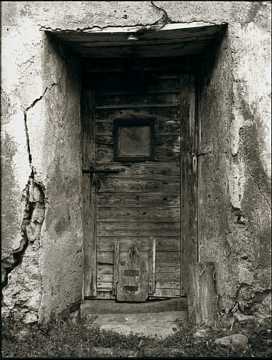
Artistic Doors from Morocco
They say something to you. Something distant, but inviting. Ageless, but always true. Colorful, and deeply filling. The doors beckon to you, then haunt you. They make you find a part of yourself that you never knew you had. Knock and await. They will open. Something new will be known.



They say something to you. Something distant, but inviting. Ageless, but always true. Colorful, and deeply filling. The doors beckon to you, then haunt you. They make you find a part of yourself that you never knew you had. Knock and await. They will open. Something new will be known.



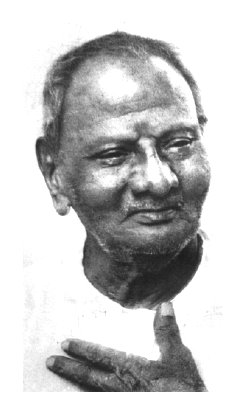 Nisargadatta Maharaj
Author of I am That
"That which you are, your true self, you love it, and whatever you do, you do for your own happiness. To find it, to know it, to cherish it is your basic urge. Since time immemorial you loved yourself, but not wisely. Use your body and mind wisely in the service of the self, that is all.
Be true to your own self, love your self absolutely. Do not pretend that you love others as yourself. Unless you have realized them as one with yourself, you cannot love them. Don’t pretend to be what you are not, don’t refuse to be what you are. Your love of others is the result of selfknowledge, not its cause. Without self-realization, no virtue is genuine.
When you know beyond all doubting that the same life flows through all that is, and you are that life, you will love all naturally and spontaneously. When you realize the depth and fullness of your love for yourself, you know that every living being and the entire universe are included in your affection. But when you look at any thing as separate from you, you cannot love it for you are afraid of it. Alienation causes fear and fear deepens alienation. It is a vicious circle. Only self-realization can break it. Go for it resolutely."
Sunday, March 12, 2006
Saturday, March 11, 2006
Friday, March 10, 2006
How We Get There
"The Mystery Schools of antiquity ... gave out deep esoteric knowledge, but at the cost of enormous labor. However, there existed among those teachers certain irresponsible ones who were rash enough to support their endeavors with drugs and poisons in order to give the illusion to their disciples of hastening their flight to the heights. But it is only an illusory push into the superconscious that drugs give; in actuality the mind is brought into a state of trance. By means of his mental powers, from previously received fragmented stimuli, the disciple pieces together completely new pictures which impress him as supercelestial and entirely new. Then people talk of wonderful scenes, preternaturally beautiful colors and fantastic forms. Here lies a great mistake.
Impulsion into spiritual realms can never occur artificially by means of drugs. It can be effected only through selfless spiritual labor, by meditation and prayer.
Source: Drugs and the Effect on the Soul, Lilo Linne, Eclectic Theosophist, June 1971
Principle of No Harm
What good is a man's knowledge unless it prompts him to
Prevent the pain of others as if it were his own pain?
Any actions which a man knows would harm himself
He should not inflict on others.
The supreme principle is this: Never knowingly
Harm anyone at any time in any way.
-Tirukkural 32: 315-317
What good is a man's knowledge unless it prompts him to
Prevent the pain of others as if it were his own pain?
Any actions which a man knows would harm himself
He should not inflict on others.
The supreme principle is this: Never knowingly
Harm anyone at any time in any way.
-Tirukkural 32: 315-317
Thursday, March 09, 2006
Not Far from Buddhahood
A university student while visiting Gasan asked him: "Have you ever read the Christian Bible?"
"No, read it to me," said Gasan.
The student opened the Bible and read from St. Matthew: "And why take ye thought for raiment? Consider the lilies of the field, how they grow. They toil not, neither do they spin, and yet I say unto you that even Solomon in all his glory was not arrayed like one of these. . . . Take therefore no thought for the morrow, for the morrow shall take thought for the things of itself."
Gasan said: "Whoever uttered those words I consider an enlightened man."
The student continued reading: "Ask and it shall be given you, seek and ye shall find, knock and it shall be opened unto you. For everyone that asketh receiveth, and he that seeketh findeth, and to him that knocketh, it shall be opened."
Gasan remarked: "That is excellent. Whoever said that is not far from Buddhahood."
Wednesday, March 08, 2006
Another View on Consciousness
"Nature gets credit which in truth should be reserved for ourselves, the rose of its scent, the nightingale for his song, and the sun for its radiance. The poets are entirely mistaken. They should address their lyrics to themselves and should turn them into odes of self-congratulations on the excellence of the human mind. Nature is a dull affair, soundless, scentless, colorless, merely the hurrying of material, endlessly, meaninglessly."
--Alfred North Whitehead
Tuesday, March 07, 2006
Is Consciousness a Form of Energy?
The essence of the argument is this: Consciousness is a form of matter-energy, with its roots in physical matter. In short, the "consciousness as a form of energy" view assumes that consciousness is an objective reality rather than a subjective (or inter-subjective) one.
This is no small issue. For that "matter," the whole problem surrounding consciousness is incredibly complex. There is a lot riding on this issue in case you haven't thought about it. Look around at the number of spirituality, psychology, and healing books that assume, in one way or another, that our consciousness is a subtle, non-measurable form of energy.
According to the contemporary philosopher Christian de Quincey, consciousness cannot be logically argued to be a form of matter-energy. Here is the essence of his critique of why it can't.
"The essence of my critique is the following quite straightforward logic:
1. Consciousness is either physical or nonphysical (there can be no middle option).
2. Consciousness is either a physical form of energy or it is a “nonphysical” form of energy.
3. If consciousness is physical energy, then we reduce it to physics (as materialists unsuccessfully try to do).
4. If consciousness is nonphysical energy, then we need to explain what we mean by “nonphysical energy.”
5. If we cannot make a meaningful and coherent distinction between “physical energy” and “nonphysical energy," then we may ask why use the term “nonphysical energy” at all?
6. If “nonphysical energy” is a phrase empty of meaningful content, and consciousness is not physical energy, therefore . . .
7. Consciousness cannot be any form of energy. It has a different kind of reality."
What is a better way to view consciousness? As much as we may love quantum physics, I would argue we are better off viewing consciousness as our most intimate subjective (inter-subjective) reality. It is our sense of interiority, and our personal experience of the world and all it contains. Why deprive ourselves of what is most precious to us: our sense of our own beingness. Reducing that experience to "subtle energy mechanics" seems a dangerous mistake to me.
As de Quincey says, "energy flows, and consciousness knows."

Baseball fans everywhere will miss him.
Kirby Puckett
Born: March 14, 1960, Chicago, Illinois
Died: March 6, 2006, Phoenix, Arizona
From the Baseball Hall of Fame records: A fun-loving and gregarious ball player, Kirby Puckett totaled 12 solid seasons with the Minnesota Twins. The 1982 first-round draft choice hit for power and average, batting .318 with 207 home runs. A true team leader, Puckett led the Twins to a pair of World Series titles in 1987 and 1991. The six-time Gold Glove winner was named to 10 consecutive All-Star teams from 1986 to 1995. Puckett finished among the top 10 in MVP voting seven times, only to have his career end prematurely after the 1995 season due to irreversible retina damage in his right eye.
Monday, March 06, 2006
Magic Garden
When we touch this domain, we are filled with the cosmic force
of life itself, we sink our roots deep into the black soil and draw
power and being up into ourselves. We know the energy of the
numen and are saturated with power and being. We feel grounded,
centered, in touch with the ancient and eternal rhythms of life.
Power and passion well up like an artesian spring and
creativity dances in celebration of life.
-David N. Elkins
The Sacred as Source of Personal Passion and Power
When we touch this domain, we are filled with the cosmic force
of life itself, we sink our roots deep into the black soil and draw
power and being up into ourselves. We know the energy of the
numen and are saturated with power and being. We feel grounded,
centered, in touch with the ancient and eternal rhythms of life.
Power and passion well up like an artesian spring and
creativity dances in celebration of life.
-David N. Elkins
The Sacred as Source of Personal Passion and Power
Sunday, March 05, 2006
Saturday, March 04, 2006
Friday, March 03, 2006
Nicely said...
I remember a short conversation between the Buddha and a philosopher of his time.
"I have heard that Buddhism is a doctrine of enlightenment. What is your method? What do you practice everyday?"
"We walk, we eat, we wash ourselves, we sit down."
"What is so special about that? Everyone walks, eats, washes, sits down..."
"Sir, when we walk, we are aware that we are walking; when we eat, we are aware that we are eating...When others walk, eat, wash, or sit down, they are generally not aware of what they are doing."
Thich Nhat Hanh, Zen Keys
I remember a short conversation between the Buddha and a philosopher of his time.
"I have heard that Buddhism is a doctrine of enlightenment. What is your method? What do you practice everyday?"
"We walk, we eat, we wash ourselves, we sit down."
"What is so special about that? Everyone walks, eats, washes, sits down..."
"Sir, when we walk, we are aware that we are walking; when we eat, we are aware that we are eating...When others walk, eat, wash, or sit down, they are generally not aware of what they are doing."
Thich Nhat Hanh, Zen Keys
On Meditation
"People often confuse meditation with prayer, devotion, or vision. They are not the same. Meditation as a practice does not address itself to a deity or present itself as an opportunity for revelation. This is not to say that people who are meditating do not occasionally think they have recieved a revelation or experienced visions. They do. But to those for whom meditation is their central practice, a vision or a revelation is seen as just another phenemenon of consciousness and as such is not to be taken as exceptional. The meditator would simply experience the ground of consciousness, and in doing so avoid excluding or excessively elevating any thought or feeling. To do this one must release all sense of the "I" that might think it is privileged to communicate with the divine."
Gary Snyder, Tricycle: The Buddhist Review, Vol. I, #1
"People often confuse meditation with prayer, devotion, or vision. They are not the same. Meditation as a practice does not address itself to a deity or present itself as an opportunity for revelation. This is not to say that people who are meditating do not occasionally think they have recieved a revelation or experienced visions. They do. But to those for whom meditation is their central practice, a vision or a revelation is seen as just another phenemenon of consciousness and as such is not to be taken as exceptional. The meditator would simply experience the ground of consciousness, and in doing so avoid excluding or excessively elevating any thought or feeling. To do this one must release all sense of the "I" that might think it is privileged to communicate with the divine."
Gary Snyder, Tricycle: The Buddhist Review, Vol. I, #1
Thursday, March 02, 2006
Outskirts
By Tomas Tranströmer
Translated by Robert Bly
Men in overalls the same color as earth rise from a ditch.
It's a transitional place, in stalemate, neither country nor city.
Construction cranes on the horizon want to take the big leap,
but the clocks are against it.
Concrete piping scattered around laps at the light with cold tongues.
Auto-body shops occupy old barns.
Stones throw shadows as sharp as objects on the moon surface.
And these sites keep on getting bigger
like the land bought with Judas' silver: "a potter's field for
burying strangers."
By Tomas Tranströmer
Translated by Robert Bly
Men in overalls the same color as earth rise from a ditch.
It's a transitional place, in stalemate, neither country nor city.
Construction cranes on the horizon want to take the big leap,
but the clocks are against it.
Concrete piping scattered around laps at the light with cold tongues.
Auto-body shops occupy old barns.
Stones throw shadows as sharp as objects on the moon surface.
And these sites keep on getting bigger
like the land bought with Judas' silver: "a potter's field for
burying strangers."
The Snowfall Is So Silent
By Miguel de Unamuno
Translated by Robert Bly
The snowfall is so silent,
so slow,
bit by bit, with delicacy
it settles down on the earth
and covers over the fields.
The silent snow comes down
white and weightless;
snowfall makes no noise,
falls as forgetting falls,
flake after flake.
It covers the fields gently
while frost attacks them
with its sudden flashes of white;
covers everything with its pure
and silent covering;
not one thing on the ground
anywhere escapes it.
And wherever it falls it stays,
content and gay,
for snow does not slip off
as rain does,
but it stays and sinks in.
The flakes are skyflowers,
pale lilies from the clouds,
that wither on earth.
They come down blossoming
but then so quickly
they are gone;
they bloom only on the peak,
above the mountains,
and make the earth feel heavier
when they die inside.
Snow, delicate snow,
that falls with such lightness
on the head,
on the feelings,
come and cover over the sadness
that lies always in my reason.
Wednesday, March 01, 2006
Tuesday, February 28, 2006
Monday, February 27, 2006
The Journey
By James Wright
Anghiari is medieval, a sleeve sloping down
A steep hill, suddenly sweeping out
To the edge of a cliff, and dwindling.
But far up the mountain, behind the town,
We too were swept out, out by the wind,
Alone with the Tuscan grass.
Wind had been blowing across the hills
For days, and everything now was graying gold
With dust, everything we saw, even
Some small children scampering along a road,
Twittering Italian to a small caged bird.
We sat beside them to rest in some brushwood,
And I leaned down to rinse the dust from my face.
I found the spider web there, whose hinges
Reeled heavily and crazily with the dust,
Whole mounds and cemeteries of it, sagging
And scattering shadows among shells and wings.
And then she stepped into the center of air
Slender and fastidious, the golden hair
Of daylight along her shoulders, she poised there,
While ruins crumbled on every side of her.
Free of the dust, as though a moment before
She had stepped inside the earth, to bathe herself.
I gazed, close to her, till at last she stepped
Away in her own good time.
Many men
Have searched all over Tuscany and never found
What I found there, the heart of the light
Itself shelled and leaved, balancing
On filaments themselves falling. The secret
Of this journey is to let the wind
Blow its dust all over your body,
To let it go on blowing, to step lightly, lightly
All the way through your ruins, and not to lose
Any sleep over the dead, who surely
Will bury their own, don't worry.
By James Wright
Anghiari is medieval, a sleeve sloping down
A steep hill, suddenly sweeping out
To the edge of a cliff, and dwindling.
But far up the mountain, behind the town,
We too were swept out, out by the wind,
Alone with the Tuscan grass.
Wind had been blowing across the hills
For days, and everything now was graying gold
With dust, everything we saw, even
Some small children scampering along a road,
Twittering Italian to a small caged bird.
We sat beside them to rest in some brushwood,
And I leaned down to rinse the dust from my face.
I found the spider web there, whose hinges
Reeled heavily and crazily with the dust,
Whole mounds and cemeteries of it, sagging
And scattering shadows among shells and wings.
And then she stepped into the center of air
Slender and fastidious, the golden hair
Of daylight along her shoulders, she poised there,
While ruins crumbled on every side of her.
Free of the dust, as though a moment before
She had stepped inside the earth, to bathe herself.
I gazed, close to her, till at last she stepped
Away in her own good time.
Many men
Have searched all over Tuscany and never found
What I found there, the heart of the light
Itself shelled and leaved, balancing
On filaments themselves falling. The secret
Of this journey is to let the wind
Blow its dust all over your body,
To let it go on blowing, to step lightly, lightly
All the way through your ruins, and not to lose
Any sleep over the dead, who surely
Will bury their own, don't worry.
Depressed by a Book of Bad Poetry, I Walk Toward an Unused Pasture and Invite the Insects to Join Me
By James Wright
Relieved, I let the book fall behind a stone.
I climb a slight rise of grass.
I do not want to disturb the ants
Who are walking single file up the fence post,
Carrying small white petals,
Casting shadows so frail that I can see through them.
I close my eyes for a moment and listen.
The old grasshoppers
Are tired, they leap heavily now,
Their thighs are burdened.
I want to hear them, they have clear sounds to make.
Then lovely, far off, a dark cricket begins
In the maple trees.
Sunday, February 26, 2006
Are You Signed Up?
Will we see you at the James Wright Poetry Festival on April 28-29, 2006?
The James Wright Poetry Festival is held annually in early spring. Major poets meet poetry enthusiasts in Martins Ferry, Ohio, Wright's home town, to read, hear and talk about poetry and the work of James Wright.
It's a great time. Besides it will give you a chance to visit Don Iannone and Dan Shimp come from.
Springtime in Martins Ferry...
Learn more here.
Will we see you at the James Wright Poetry Festival on April 28-29, 2006?
The James Wright Poetry Festival is held annually in early spring. Major poets meet poetry enthusiasts in Martins Ferry, Ohio, Wright's home town, to read, hear and talk about poetry and the work of James Wright.
It's a great time. Besides it will give you a chance to visit Don Iannone and Dan Shimp come from.
Springtime in Martins Ferry...
Learn more here.
Spring is like a perhaps hand
By E. E. Cummings
Spring is like a perhaps hand
(which comes carefully
out of Nowhere)arranging
a window,into which people look(while
people stare
arranging and changing placing
carefully there a strange
thing and a known thing here)and
changing everything carefully
spring is like a perhaps
Hand in a window
(carefully to
and fro moving New and
Old things,while
people stare carefully
moving a perhaps
fraction of flower here placing
an inch of air there)and
without breaking anything.
By E. E. Cummings
Spring is like a perhaps hand
(which comes carefully
out of Nowhere)arranging
a window,into which people look(while
people stare
arranging and changing placing
carefully there a strange
thing and a known thing here)and
changing everything carefully
spring is like a perhaps
Hand in a window
(carefully to
and fro moving New and
Old things,while
people stare carefully
moving a perhaps
fraction of flower here placing
an inch of air there)and
without breaking anything.

Saturday, February 25, 2006
Friday, February 24, 2006

Thursday, February 23, 2006
 Poet Dylan?
In 2004, a Newsweek magazine article called Bob Dylan "the most influential cultural figure now alive," and with good reason. He has released more than forty albums in the last four decades, and created some of the most memorable anthems of the twentieth century, classics such as "The Times They Are A-Changin," "Like a Rolling Stone," and "Blowin' in the Wind."
While Dylan's place in the pantheon of American musicians is cemented, there is one question that has confounded music and literary critics for the entirety of Dylan's career: Should Bob Dylan be considered a songwriter or a poet? Dylan was asked that very question at a press conference in 1965, when he famously said, "I think of myself more as a song-and-dance man."
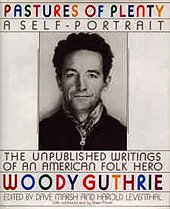 "I ain't a writer," Woody Guthrie once wrote, "I want that understood. I'm just a little one-cylinder guitar picker." Of course, that humble sentiment was part of his public persona--the howdy-doo Woody Guthrie, the ramblin' everyman, the down-home folk singer, poet of the people. The truth, however, is that Guthrie wrote an incredible amount of material: songs, essays, poems, stories, diaries, and letters. In total, an estimated 750,000 words were left unpublished when Guthrie died in 1967.
Wednesday, February 22, 2006
A Supermarket in California
By Allen Ginsberg
What thoughts I have of you tonight, Walt Whitman, for I walked
down the sidestreets under the trees with a headache self-conscious looking
at the full moon.
In my hungry fatigue, and shopping for images, I went into the neon
fruit supermarket, dreaming of your enumerations!
What peaches and what penumbras! Whole families shopping at
night! Aisles full of husbands! Wives in the avocados, babies in the tomatoes!
--and you, García Lorca, what were you doing down by the watermelons?
I saw you, Walt Whitman, childless, lonely old grubber, poking
among the meats in the refrigerator and eyeing the grocery boys.
I heard you asking questions of each: Who killed the pork chops?
What price bananas? Are you my Angel?
I wandered in and out of the brilliant stacks of cans following you,
and followed in my imagination by the store detective.
We strode down the open corridors together in our solitary fancy
tasting artichokes, possessing every frozen delicacy, and never passing the
cashier.
Where are we going, Walt Whitman? The doors close in a hour.
Which way does your beard point tonight?
(I touch your book and dream of our odyssey in the supermarket and
feel absurd.)
Will we walk all night through solitary streets? The trees add shade
to shade, lights out in the houses, we'll both be lonely.
Will we stroll dreaming of the lost America of love past blue automo-
biles in driveways, home to our silent cottage?
Ah, dear father, graybeard, lonely old courage-teacher, what America
did you have when Charon quit poling his ferry and you got out on a
smoking bank and stood watching the boat disappear on the black waters of
Lethe?
Hear Ginsberg read this poem here.
By Allen Ginsberg
What thoughts I have of you tonight, Walt Whitman, for I walked
down the sidestreets under the trees with a headache self-conscious looking
at the full moon.
In my hungry fatigue, and shopping for images, I went into the neon
fruit supermarket, dreaming of your enumerations!
What peaches and what penumbras! Whole families shopping at
night! Aisles full of husbands! Wives in the avocados, babies in the tomatoes!
--and you, García Lorca, what were you doing down by the watermelons?
I saw you, Walt Whitman, childless, lonely old grubber, poking
among the meats in the refrigerator and eyeing the grocery boys.
I heard you asking questions of each: Who killed the pork chops?
What price bananas? Are you my Angel?
I wandered in and out of the brilliant stacks of cans following you,
and followed in my imagination by the store detective.
We strode down the open corridors together in our solitary fancy
tasting artichokes, possessing every frozen delicacy, and never passing the
cashier.
Where are we going, Walt Whitman? The doors close in a hour.
Which way does your beard point tonight?
(I touch your book and dream of our odyssey in the supermarket and
feel absurd.)
Will we walk all night through solitary streets? The trees add shade
to shade, lights out in the houses, we'll both be lonely.
Will we stroll dreaming of the lost America of love past blue automo-
biles in driveways, home to our silent cottage?
Ah, dear father, graybeard, lonely old courage-teacher, what America
did you have when Charon quit poling his ferry and you got out on a
smoking bank and stood watching the boat disappear on the black waters of
Lethe?
Hear Ginsberg read this poem here.
The Past
By Barbara Guest
The form of the poem subsided, it enters another poem.
A witness was found for the markings inscribed upside-down.
It might have been a celebration, so strong the presence
of the poem. The sky sinks slowly inside the past.
Barbara Guest died on February 15, 2006. A truly great poet who knew how to use space to call attention to language.
By Barbara Guest
The form of the poem subsided, it enters another poem.
A witness was found for the markings inscribed upside-down.
It might have been a celebration, so strong the presence
of the poem. The sky sinks slowly inside the past.
Barbara Guest died on February 15, 2006. A truly great poet who knew how to use space to call attention to language.
Tuesday, February 21, 2006
I Am
I am
only because I see you look at me,
your gaze gives life to me,
at this moment
I become in your eyes,
if I see them
I am
only because I can hear your voice talking to me,
and I know that you hear me.
I know that you are
only because I can touch you
I am
only because of our touching
each other.
Source: OMind
I am
only because I see you look at me,
your gaze gives life to me,
at this moment
I become in your eyes,
if I see them
I am
only because I can hear your voice talking to me,
and I know that you hear me.
I know that you are
only because I can touch you
I am
only because of our touching
each other.
Source: OMind
Monday, February 20, 2006
Consciousness
"Consciousness, therefore, is what enables us to feel, think, know, intend, attend, perceive, choose, and create . . . It is the source of all meaning, value, and purpose in our lives and in the world. It is “interior,” it is what enables us to feel and know who we are inside—distinct from our external, physical bodies."
--Christian de Quincey, Ph.D.
Philosopher of Mind and Consciousness
"Consciousness, therefore, is what enables us to feel, think, know, intend, attend, perceive, choose, and create . . . It is the source of all meaning, value, and purpose in our lives and in the world. It is “interior,” it is what enables us to feel and know who we are inside—distinct from our external, physical bodies."
--Christian de Quincey, Ph.D.
Philosopher of Mind and Consciousness

Sunday, February 19, 2006

Saturday, February 18, 2006

Friday, February 17, 2006
The Road Not Taken
By Robert Frost
Two roads diverged in a yellow wood,
And sorry I could not travel both
And be one traveler, long I stood
And looked down one as far as I could
To where it bent in the undergrowth;
Then took the other, as just as fair,
And having perhaps the better claim,
Because it was grassy and wanted wear;
Though as for that the passing there
Had worn them really about the same,
And both that morning equally lay
In leaves no step had trodden black.
Oh, I kept the first for another day!
Yet knowing how way leads on to way,
I doubted if I should ever come back.
I shall be telling this with a sigh
Somewhere ages and ages hence:
Two roads diverged in a wood, and I--
I took the one less traveled by,
And that has made all the difference.
By Robert Frost
Two roads diverged in a yellow wood,
And sorry I could not travel both
And be one traveler, long I stood
And looked down one as far as I could
To where it bent in the undergrowth;
Then took the other, as just as fair,
And having perhaps the better claim,
Because it was grassy and wanted wear;
Though as for that the passing there
Had worn them really about the same,
And both that morning equally lay
In leaves no step had trodden black.
Oh, I kept the first for another day!
Yet knowing how way leads on to way,
I doubted if I should ever come back.
I shall be telling this with a sigh
Somewhere ages and ages hence:
Two roads diverged in a wood, and I--
I took the one less traveled by,
And that has made all the difference.
Thursday, February 16, 2006
What is Death But Another Part of the Life Adventure
"When it comes time to die, be not like those whose hearts are filled with the fear of death, so when their time comes they weep and pray for a little more time to live their lives over again in a different way. Sing your death song, and die like a hero going home." --Chief Aupumut, Mohican. 1725
Wednesday, February 15, 2006
Tuesday, February 14, 2006
The Six Perfections
1. The Perfection of Generosity
From the virtuous merit that I collect, by practicing generosity and the other perfections, may I attain the state of Buddha to be able to benefit all sentient beings.
2. The Perfection of Ethics
In order to observe a rule of life, the mind must zealously be guarded. It is not possible to observe any discipline without guarding the quivering mind.
Unsubdued and overwrought elephants do not effect that damage here which the unrestrained mind, an elephant roaming wild, does in the Avici hell and elsewhere.
If this elephant of mind is bound on all sides by the cord of mindfulness, all fear disappears and complete happiness comes.
3. The Perfection of Patience
Hostility destroys all the moral conduct, charity, and reverence of the Buddhas, which has been achieved in thousands of aeons.
No evil is equal to hatred, and no austerity is equal to patience. Therefore one ought diligently to cultivate patience by a variety of means.
Therefore I will destroy hatred's nourishment, because that enemy has no other purpose than my destruction.
My joy will not be disturbed, even by the occurrence of the most frustrating event, because even in unhappiness, there is nothing which can adversely affect a virtue which one truly desires.
4. The Perfection of Effort
Thus having become patient, one should become heroic, for Enlightenment is gained by standing strong. Without strength there is no merit, as without the mind there is no movement.
What is strength? Proper effort. What is its adversary? Sloth: attachment to contemptible things, despair, self-despising. Because one is unconcerned with the sorrow of rebirth, sloth arises through inertia, relish for pleasure, torpor, and eagerness to be protected.
Having obtained the chariot of the Thought of Enlightenment, which removes all depression and fatigue, going from happiness to happiness, who that is intelligent would be despondent?
For achieving the welfare of beings,there is the power of zeal, constancy, joy, and release.
Eagerness is derived from a fear of sorrow, and it becomes beneficial because of actions.
Then, after having eradicated the enemy, one should strive for an increase of strength, by means of the power of zeal, pride, joy, sacrifice, dedication, and mastery.
5. The Perfection of Concentration
Solitudes are pleasing, kindly, the dawn of all that is auspicious, the tranquilizers of all disturbance. Let me always frequent them!
Liberated from the thought of anything else, the mind centers one-pointedly upon its own thought, I shall strive for the composing of thought and its control.
6. The Perfection of Wisdom
The Buddha taught that this multitude of virtues is all for the sake of wisdom; hence, by means of one's desire for the extinction of sorrow, let wisdom arise.
Source: Bodhicitta
Monday, February 13, 2006
Preparing Ourselves
"...if we remain clinging to this life even for one day, we are misusing our time. In this way, we can waste months and years on end. Because we don't know when our lives will finish, we should remain mindful and well prepared. Then, even if we die tonight, we will do so without regret. If we die tonight, the purpose of being well prepared is borne out; if we don't die tonight, there is no harm in being well prepared, because it will still benefit us.
But when we leave the world of humans, we do so without a protector or supporter and the total responsibility falls on us. We only have our own intelligence to rely on at that time, so we must expend our own effort in order to protect ourselves. As the Buddha said, "I have shown you the path to liberation; know that liberation depends on you." We must put strenuous effort into gaining freedom from the lower migrations, liberation from samsara, freedom from conventional existence and solitary salvation.
The body is compared to a guest house; it is a place to stay for just a short time and not permanently. At present, the guest of consciousness is staying in the guest house of the body, like renting a place to stay. When the day comes for consciousness to leave, the guest house of the body must be left behind. Not being attached to friends, the body, wealth and possessions is the practice of the Bodhisattvas."
-- from "The Heart of Compassion: A Practical Approach to a Meaningful Life," by His Holiness the XIV Dalai Lama.

Sunday, February 12, 2006
Saturday, February 11, 2006

Friday, February 10, 2006

Thursday, February 09, 2006

Wednesday, February 08, 2006

Tuesday, February 07, 2006
Monday, February 06, 2006
Sunday, February 05, 2006
From Christian Fundamentalism to Evolution to Non-Belief to New Age Eclecticism to Consciousness and Buddhism to ?
What do you believe about yourself, the Universe, the origins of life, and the Cosmos? Some people seem less compelled than others to explore these issues. They have always been important to me.
I grew up believing that God created me and everything else in the Universe. This belief was held to be "self-evident" and an unquestionable fact of life.
Only a crazy man or woman, or even worse, one possessed by the devil, would question there was a God and that the ONLY path to God was an indirect one through Jesus Christ. Believe in Jesus Christ, follow His teachings on a daily basis, obey your parents, the preacher, your Sunday school teacher, and you were a shoo in for Heaven.
Looking for knowledge and wisdom to guide your life? If you wanted to know the secrets of the Universe or needed a guide for everyday life, one only need read the Bible, considered by most Christians to be either the "exact" or "inspired" word of God Himself.
As a young child growing up in Eastern Ohio, to utter the word "evolution" was considered blasphemous. Man descended from an ape? Think again son. I was born with a natural and deep curiosity about life and what made it tick.
Eventually, my curiosity got the best of me and I began to read certain books (on evolution and other things) buried in the recesses of the public library. I discovered there were other ideas about where the Universe came from and what life was all about. In my junior year in high school, I co-founded St. Clairsville High School's first Philosophy Club. We needed two teachers to serve as advisors to the club. Mr. Voss, our Biology teacher, and Mr. Sharpe, our English teacher, agreed to assume this role. With that, the Philosophy Club was set in motion. That was 1968.
Through the Philosophy Club, I was exposed to poetry, Existentialism, the concept of social justice, and e-v-o-l-u-t-i-o-n. It was inevitable that I would drift from my dogmatic fundamentalist Christian roots. The Philosophy Club created a social context (community of like-minded souls) for my escape.
Needless to say, the contents of our Philosophy Club discussions were never revealed at home, for fear that Mom and Dad would discover my secret plot to withdraw from their teachings and beliefs. It was not until I was safely enrolled at the University of Arizona and taking my first Anthropology class that I announced to Mom and Dad that they were mistaken. Mistaken? About what? Everything I said, but especially about Christianity being the only pipeline to God. They urged me to find a "good" church in Tucson to cleanse my mind and heart of such thoughts. That is exactly what I did. It was called "the church of higher education." Yes, I am referring to the UA, Anthropology, and many other sources of revolutionary ideas.
By the time I had completed my Anthropology degree, I felt cleansed of the unscientific and primitive religious ideas that fed my mind throughout my childhood and teenage years. There was no God. Human beings and all other life forms got here by way of evolution. I was living proof of just that because I was evolving my beliefs and worldview in new directions.
Most of the wounds endured by Mom and Dad and me were healed over time. I am thankful for that. They were who they were, and I was who I was.
For many years, I set aside my curiosity about the cosmos, evolution, God, philosophy, and other things. While I was accepted at several Ph.D. programs in Anthropology, I decided to enter a Ph.D. program in Organizational Behavior instead--a program I never finished because it demanded too much of me personally. I felt indoctrinated. It was an uncomfortable feeling; bringing back the first 18 years of my life and my struggle to be my own person. Why did I need to change who and how I was? I can become an organizational change agent without changing myself. Or so I thought. I jumped ship and decided to work. After all, that is where my education should lead me anyway.
My life shifted to the pragmatic concerns of family and career. What possible value could these esoteric subjects be to my daily life of raising a family and growing a career? I spent the next twenty years in Non-Belief. Actually, my basic belief was that it didn't matter what I believed. What mattered most was what I did with my life. My belief was that life was about doing. And doing I did. To my surprise, my reality started to fall apart. That was 1986. The year before my father-in-law died. In January 1986, my Mom died. I changed jobs. My marriage was in serious trouble. And I didn't have the foggiest idea who I was and where I was going.
It hit me one day that I needed to believe something, and so I was in search of something to believe. Christianity wasn't an option. Nor was Evolution and Relativism. What? I started looking around and discovered New Age Spirituality, which embodied everything from Native American spirituality to esoteric astrology to versions of various Eastern religions. I learned a lot from my experiences in the New Age circle. Most importantly, I discovered that I was most comfortable being eclectic in my spiritual and philosophical beliefs. That lasted for almost 15 years.
In 2002, I took up meditation, which has helped me to move from believing to being. All thought is illusion masquerading as reality. Our minds are out of control amusement parks. Reality in an absolute sense may exist, but it is unknowable to us. We have our experience, our thoughts, our feelings, and our consciousness. We have a responsibility to observe our thoughts, know them, feel them, and consciously decide whether they make any real sense. We should cultivate mindfulness, loving kindness, and compassion for others. Life is not about us. Rather, it is about getting beyond ourselves and serving others.
It's now 2006. I am immersed in the study of consciousness and its role in the Universe. What does consciousness have to do with the Universe, spirituality, and other matters? Everything! Not the least of which is that our consciousness is who we are. It is the subject that comes prior to all else that we experience. In the words of Sri Nisargadatta Maharaj, "I am That!"
Given the controversy swirling around Intelligent Design, Creationism, and Evolution, let me clarify one point: "I am not an Intelligent Design (ID) groupie!" At the same time, I do not believe that evolution even comes close to providing complete answers about our origin and nature.
Our consciousness is the subjective aspect of who we are. While Western science, with its current Materialism-bound methods, is not well prepared to tackle the study of consciousness, we can at least evolve an improved philosophy to guide that science in the future. People like Christian de Quincey, one of my teachers, is well along that path. I concur with the recent observation by His Holiness The Dalai Lama: Spirituality needs the rigor of science, and science needs a recognition of soul and spirit.
Stay tuned. I will be adding further thoughts on this topic in the future. This is just one man's journey to find himself and bring more peace and wisdom to the world around him.
What do you believe about yourself, the Universe, the origins of life, and the Cosmos? Some people seem less compelled than others to explore these issues. They have always been important to me.
I grew up believing that God created me and everything else in the Universe. This belief was held to be "self-evident" and an unquestionable fact of life.
Only a crazy man or woman, or even worse, one possessed by the devil, would question there was a God and that the ONLY path to God was an indirect one through Jesus Christ. Believe in Jesus Christ, follow His teachings on a daily basis, obey your parents, the preacher, your Sunday school teacher, and you were a shoo in for Heaven.
Looking for knowledge and wisdom to guide your life? If you wanted to know the secrets of the Universe or needed a guide for everyday life, one only need read the Bible, considered by most Christians to be either the "exact" or "inspired" word of God Himself.
As a young child growing up in Eastern Ohio, to utter the word "evolution" was considered blasphemous. Man descended from an ape? Think again son. I was born with a natural and deep curiosity about life and what made it tick.
Eventually, my curiosity got the best of me and I began to read certain books (on evolution and other things) buried in the recesses of the public library. I discovered there were other ideas about where the Universe came from and what life was all about. In my junior year in high school, I co-founded St. Clairsville High School's first Philosophy Club. We needed two teachers to serve as advisors to the club. Mr. Voss, our Biology teacher, and Mr. Sharpe, our English teacher, agreed to assume this role. With that, the Philosophy Club was set in motion. That was 1968.
Through the Philosophy Club, I was exposed to poetry, Existentialism, the concept of social justice, and e-v-o-l-u-t-i-o-n. It was inevitable that I would drift from my dogmatic fundamentalist Christian roots. The Philosophy Club created a social context (community of like-minded souls) for my escape.
Needless to say, the contents of our Philosophy Club discussions were never revealed at home, for fear that Mom and Dad would discover my secret plot to withdraw from their teachings and beliefs. It was not until I was safely enrolled at the University of Arizona and taking my first Anthropology class that I announced to Mom and Dad that they were mistaken. Mistaken? About what? Everything I said, but especially about Christianity being the only pipeline to God. They urged me to find a "good" church in Tucson to cleanse my mind and heart of such thoughts. That is exactly what I did. It was called "the church of higher education." Yes, I am referring to the UA, Anthropology, and many other sources of revolutionary ideas.
By the time I had completed my Anthropology degree, I felt cleansed of the unscientific and primitive religious ideas that fed my mind throughout my childhood and teenage years. There was no God. Human beings and all other life forms got here by way of evolution. I was living proof of just that because I was evolving my beliefs and worldview in new directions.
Most of the wounds endured by Mom and Dad and me were healed over time. I am thankful for that. They were who they were, and I was who I was.
For many years, I set aside my curiosity about the cosmos, evolution, God, philosophy, and other things. While I was accepted at several Ph.D. programs in Anthropology, I decided to enter a Ph.D. program in Organizational Behavior instead--a program I never finished because it demanded too much of me personally. I felt indoctrinated. It was an uncomfortable feeling; bringing back the first 18 years of my life and my struggle to be my own person. Why did I need to change who and how I was? I can become an organizational change agent without changing myself. Or so I thought. I jumped ship and decided to work. After all, that is where my education should lead me anyway.
My life shifted to the pragmatic concerns of family and career. What possible value could these esoteric subjects be to my daily life of raising a family and growing a career? I spent the next twenty years in Non-Belief. Actually, my basic belief was that it didn't matter what I believed. What mattered most was what I did with my life. My belief was that life was about doing. And doing I did. To my surprise, my reality started to fall apart. That was 1986. The year before my father-in-law died. In January 1986, my Mom died. I changed jobs. My marriage was in serious trouble. And I didn't have the foggiest idea who I was and where I was going.
It hit me one day that I needed to believe something, and so I was in search of something to believe. Christianity wasn't an option. Nor was Evolution and Relativism. What? I started looking around and discovered New Age Spirituality, which embodied everything from Native American spirituality to esoteric astrology to versions of various Eastern religions. I learned a lot from my experiences in the New Age circle. Most importantly, I discovered that I was most comfortable being eclectic in my spiritual and philosophical beliefs. That lasted for almost 15 years.
In 2002, I took up meditation, which has helped me to move from believing to being. All thought is illusion masquerading as reality. Our minds are out of control amusement parks. Reality in an absolute sense may exist, but it is unknowable to us. We have our experience, our thoughts, our feelings, and our consciousness. We have a responsibility to observe our thoughts, know them, feel them, and consciously decide whether they make any real sense. We should cultivate mindfulness, loving kindness, and compassion for others. Life is not about us. Rather, it is about getting beyond ourselves and serving others.
It's now 2006. I am immersed in the study of consciousness and its role in the Universe. What does consciousness have to do with the Universe, spirituality, and other matters? Everything! Not the least of which is that our consciousness is who we are. It is the subject that comes prior to all else that we experience. In the words of Sri Nisargadatta Maharaj, "I am That!"
Given the controversy swirling around Intelligent Design, Creationism, and Evolution, let me clarify one point: "I am not an Intelligent Design (ID) groupie!" At the same time, I do not believe that evolution even comes close to providing complete answers about our origin and nature.
Our consciousness is the subjective aspect of who we are. While Western science, with its current Materialism-bound methods, is not well prepared to tackle the study of consciousness, we can at least evolve an improved philosophy to guide that science in the future. People like Christian de Quincey, one of my teachers, is well along that path. I concur with the recent observation by His Holiness The Dalai Lama: Spirituality needs the rigor of science, and science needs a recognition of soul and spirit.
Stay tuned. I will be adding further thoughts on this topic in the future. This is just one man's journey to find himself and bring more peace and wisdom to the world around him.
Saturday, February 04, 2006
 Longing to Be
Your spirit longs
...to be
forever
and it shall
...no matter what you want.
Photo Credit:
Oak Creek Canyon AZ

Friday, February 03, 2006
Lessons on Life
Author Unknown
There was a man who had four sons. He wanted his sons to
learn not to judge things too quickly. So he sent them
each on a quest, in turn, to go and look
at a pear tree that was a great distance away.
The first son went in the winter, the second in the spring,
the third in summer, and the youngest son in the fall.
When they had all gone and come back, he called them
together to describe what they had seen.
The first son said that the tree was ugly, bent, and twisted.
The second son said no it was covered with green buds
and full of promise.
The third son disagreed; he said it was laden with blossoms
that smelled so sweet and looked so beautiful, it was
the most graceful thing he had ever seen.
The last son disagreed with all of them; he said it was
ripe and drooping with fruit, full of life and fulfillment.
The man then explained to his sons that they were all right,
because they had each seen but only one season in
the tree's life.
He told them that you cannot judge a tree, or a person,
by only one season, and that the essence of who they are
and the pleasure, joy, and love that come
from that life can only be measured at the end, when
all the seasons are up.
If you give up when it's winter, you will miss the promise
of your spring, the beauty of your summer, fulfillment
of your fall.
Moral:
Don't let the pain of one season destroy the joy of all the rest.
Don't judge life by one difficult season.
Persevere through the difficult patches
and better times are sure to come some time or later.
-----------------------------------------------------
Aunt Jean in Columbus sent this along to me. I thought you might enjoy it as much as I did. Thanks Aunt Jean!
Subscribe to:
Posts (Atom)